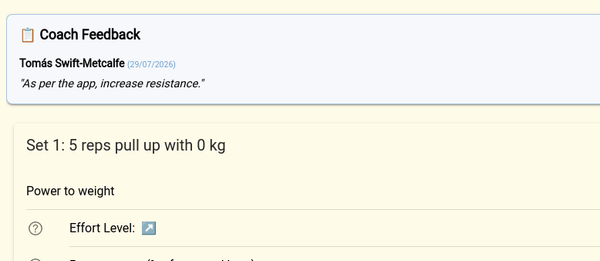
Understanding the Difficulty Rating: An elegant way to capture high force low power movements
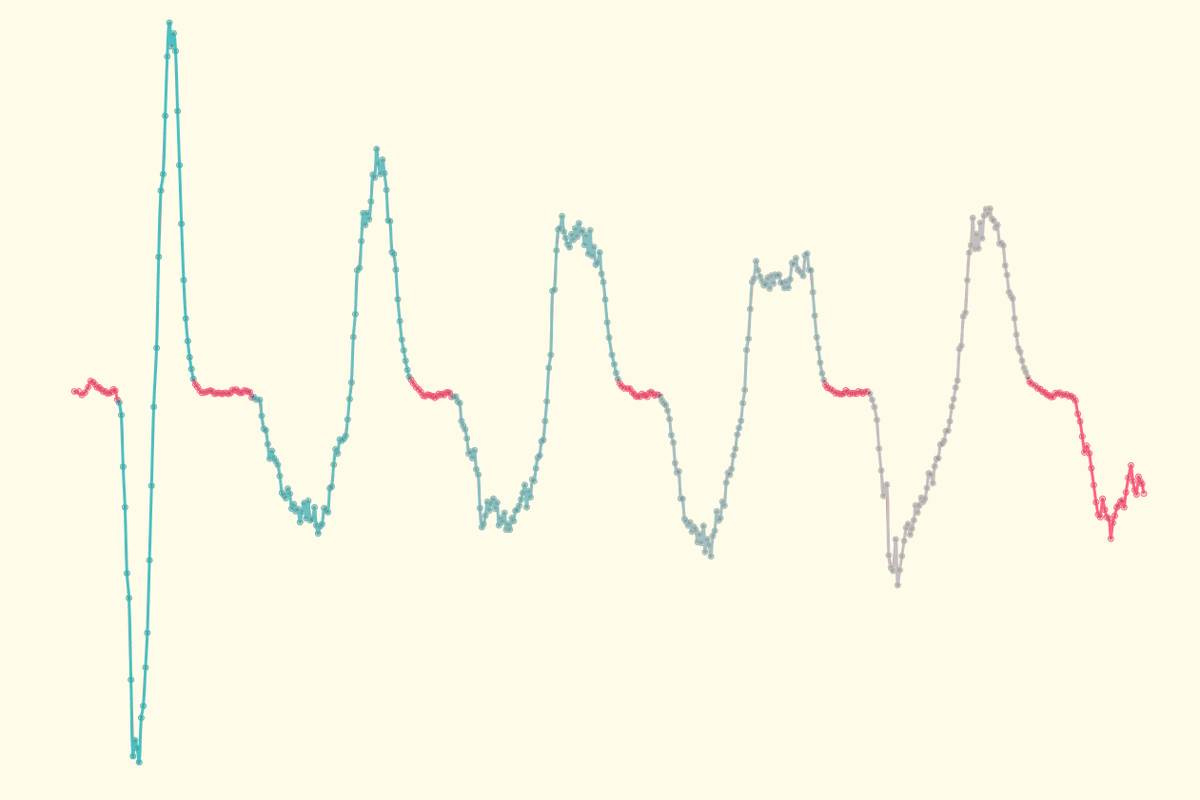
In strength sports, gymnastics, and calisthenics, we all know that doing a movement slowly can be harder than doing a movement quickly. Slow reps also count!
While power nicely captures the difficulty of quick movements, and is very good for observing changes in performance, it can't capture slow but also difficult movements which tend to amplify the effect of the "sticking point" (the point of failure in movement, normally were biomechanical efficiency is lowest) and also result in task failure. Try it now, do a quick air squat, then a really slow one taking 4-5 s... It feels a good bit harder.
To solve this, I developed a custom kinematic model: The Difficulty Rating (Energy Deficit Fatigue Index).
The Physics: What is the Energy Deficit?
At any given split-second of a lift, there is a minimum amount of energy required to "coast" over the sticking point and complete the movement. This is your potential energy requirement.
At the same time, your body has actual kinetic energy based on your mass and speed.
We define the Energy Deficit as:
- Where m is your total moving mass (bodyweight + external load).
- g is acceleration due to gravity 9.81m/s²
- h remaining is the vertical distance left to clear the peak.
- v(t)² is your instantaneous velocity.
If you are moving fast (high velocity), your kinetic energy cancels out the gravity requirement, dropping the energy deficit to zero. Momentum takes care of it.
But if you slow down, the kinetic energy drops, leaving a high deficit. Your muscles must actively produce concentric force to clear this deficit.
The Difficulty Rating: Integrating Energy Deficit Over Time
To get a single rating for the entire rep, we integrate (sum up) this energy deficit over the duration of the transition zone:
This Riemann integration creates a highly sensitive metric. Because it multiplies energy deficit by duration, a slow, grinding rep doesn't just increase the score linearly—it increases it exponentially, much inline with how reps become much harder, the slower they are.
The Brackets:
- 300 J·s (Quick): You sailed through the sticking point with great speed. Form was explosive, and momentum did most of the work.
- 300 - 600 J·s (Moderate): A standard, controlled lift. You slowed down slightly but cleared the transition smoothly.
- 600 - 900 J·s (Slow): Fatigue is setting in. You spent significant time under tension grinding through the worst mechanical angles.
- >900 J·s (Very Slow): Complete grind. You had zero momentum and had to statically fight gravity to finish the rep.
Why This is a Game-Changer for Athletes
- It provides a method to quantify "slow" but hard reps.
- Encapsulates "time under tension."
- Compliments normal and explosive training.